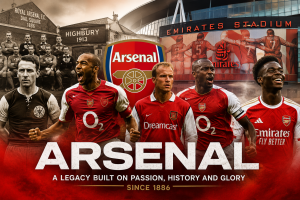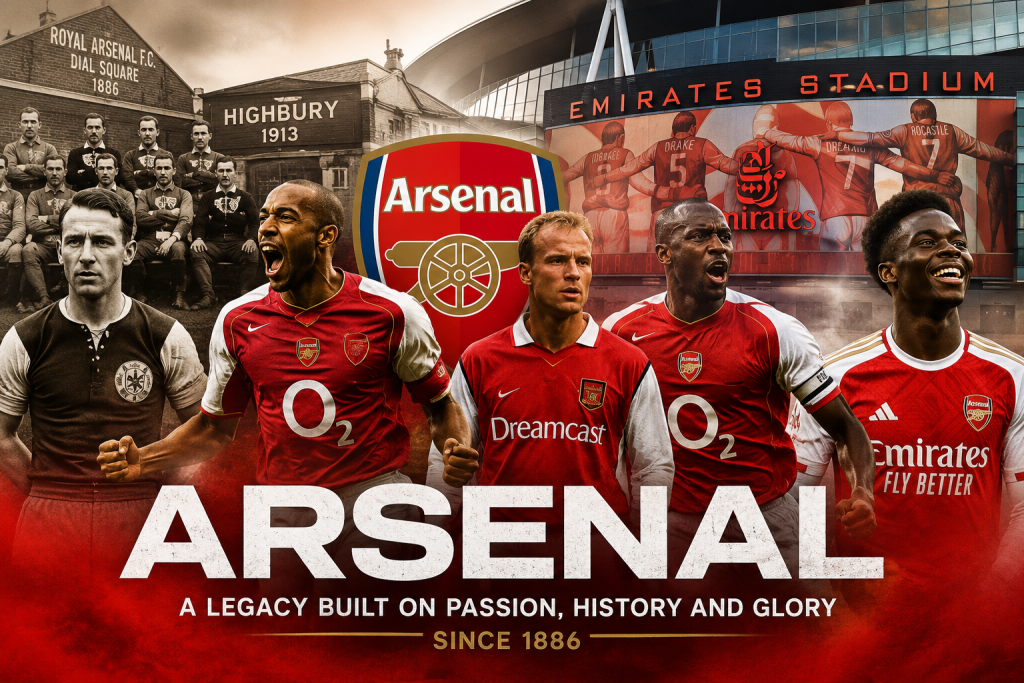
Football is full of famous clubs, but only a few have built a legacy that stretches across generations while staying true to their identity. Arsenal Football Club is one of those rare teams. From humble beginnings in South London to becoming one of England’s most respected football institutions, Arsenal’s journey is a story of ambition, innovation, unforgettable triumphs, painful setbacks, and unwavering loyalty from millions of supporters around the world.
Whether you are a lifelong Arsenal fan or simply love football history, understanding the club’s past reveals why Arsenal remains one of the biggest names in the sport today.
Where It All Began
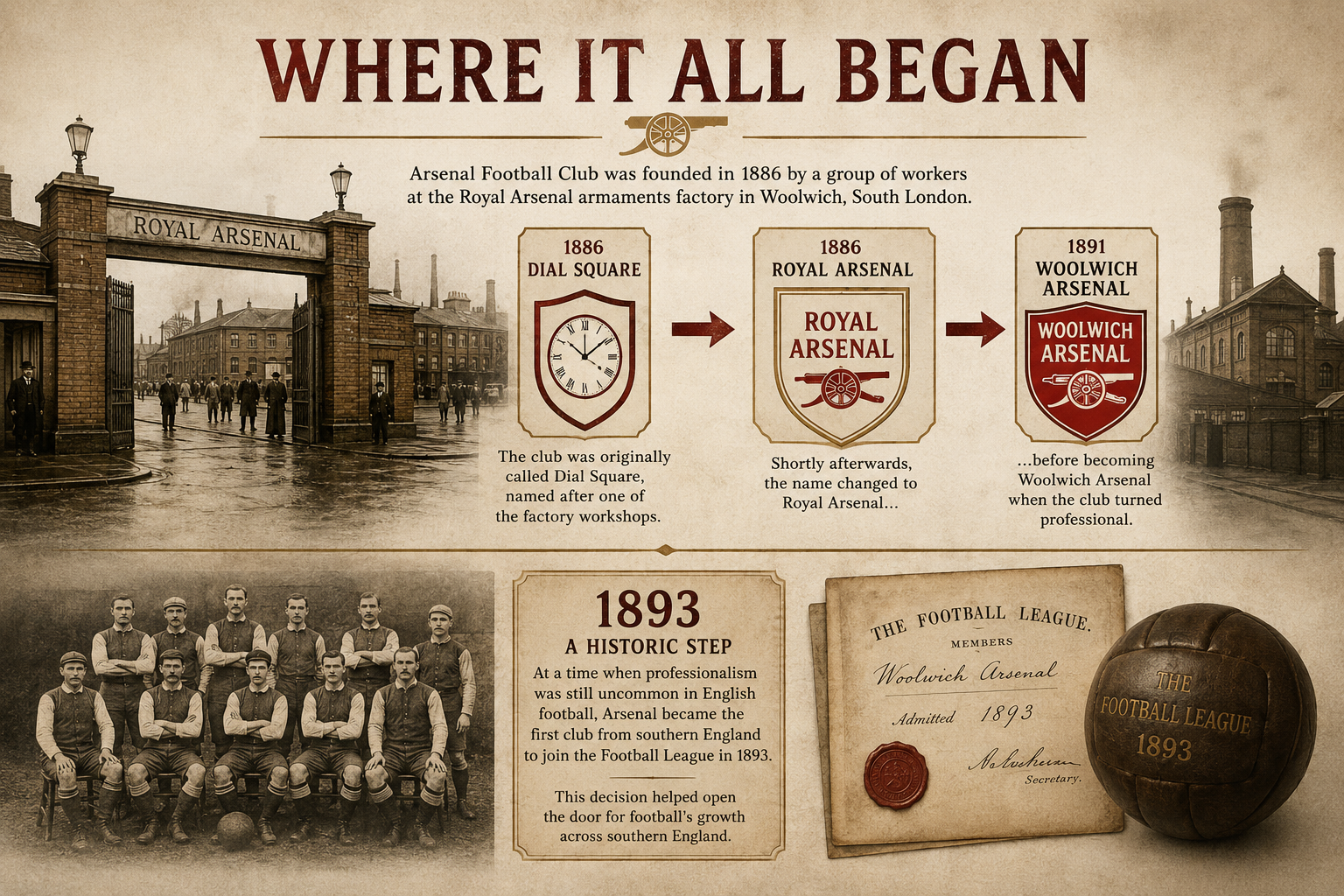
Arsenal Football Club was founded in 1886 by a group of workers at the Royal Arsenal armaments factory in Woolwich, South London. The club was originally called Dial Square, named after one of the factory workshops. Shortly afterwards, the name changed to Royal Arsenal, before becoming Woolwich Arsenal when the club turned professional.
At a time when professionalism was still uncommon in English football, Arsenal became the first club from southern England to join the Football League in 1893. This decision helped open the door for football’s growth across southern England.
The Move That Changed Everything
Despite its early ambitions, Woolwich Arsenal struggled financially. Crowds were small, and the club faced serious financial difficulties.
In 1913, businessman Sir Henry Norris made the bold decision to relocate the club to Highbury, in North London. The move was controversial because it brought Arsenal closer to Tottenham Hotspur, beginning one of English football’s fiercest rivalries.
After the relocation, the club officially became known simply as Arsenal Football Club.
Herbert Chapman: The Man Who Changed Football
One of the most important moments in Arsenal’s history came in 1925, when Herbert Chapman became manager.
Chapman wasn’t just building a football team—he was transforming the game itself.
He introduced several innovations that later became standard in football, including:
- Modern tactical systems such as the famous “WM” formation.
- Shirt numbers for players.
- Improved training methods.
- Better fitness and medical care.
- Floodlights for training.
- Stronger scouting networks.
His influence reached far beyond Arsenal.
Arsenal’s First Golden Era
Under Chapman, Arsenal became one of England’s dominant clubs.
During the 1930s, Arsenal won:
- Five First Division league titles
- Two FA Cups
Even after Chapman’s sudden death in 1934, the team he built continued winning under his successors.
The decade established Arsenal as one of England’s football powerhouses.
Life After World War II
Like many clubs, Arsenal’s progress was interrupted by World War II.
When football resumed, Arsenal gradually rebuilt and enjoyed further success.
Highlights included:
- League champions in 1947–48
- League champions in 1952–53
- FA Cup winners in 1950
Although the following years brought fewer trophies, Arsenal remained one of England’s most respected clubs.
The Double That Made History
The 1970s brought one of Arsenal’s greatest achievements.
In the 1970–71 season, Arsenal won:
- The First Division title.
- The FA Cup.
Winning both competitions in the same season—known as “The Double”—was an extraordinary accomplishment.
The FA Cup final against Liverpool became one of the most memorable matches in Arsenal history, ending with a dramatic extra-time victory.
George Graham and the Return to Glory
During the late 1980s and early 1990s, manager George Graham rebuilt Arsenal around discipline, organization and defensive excellence.
His team became famous for its incredibly strong back four.
Major achievements included:
- League titles in 1988–89 and 1990–91
- FA Cup victory
- League Cup victory
- European Cup Winners’ Cup in 1994
One of the most unforgettable moments came in 1989, when Arsenal defeated Liverpool at Anfield to win the league title with virtually the last kick of the season.
It remains one of English football’s greatest title deciders.
Arsène Wenger Revolutionized Arsenal
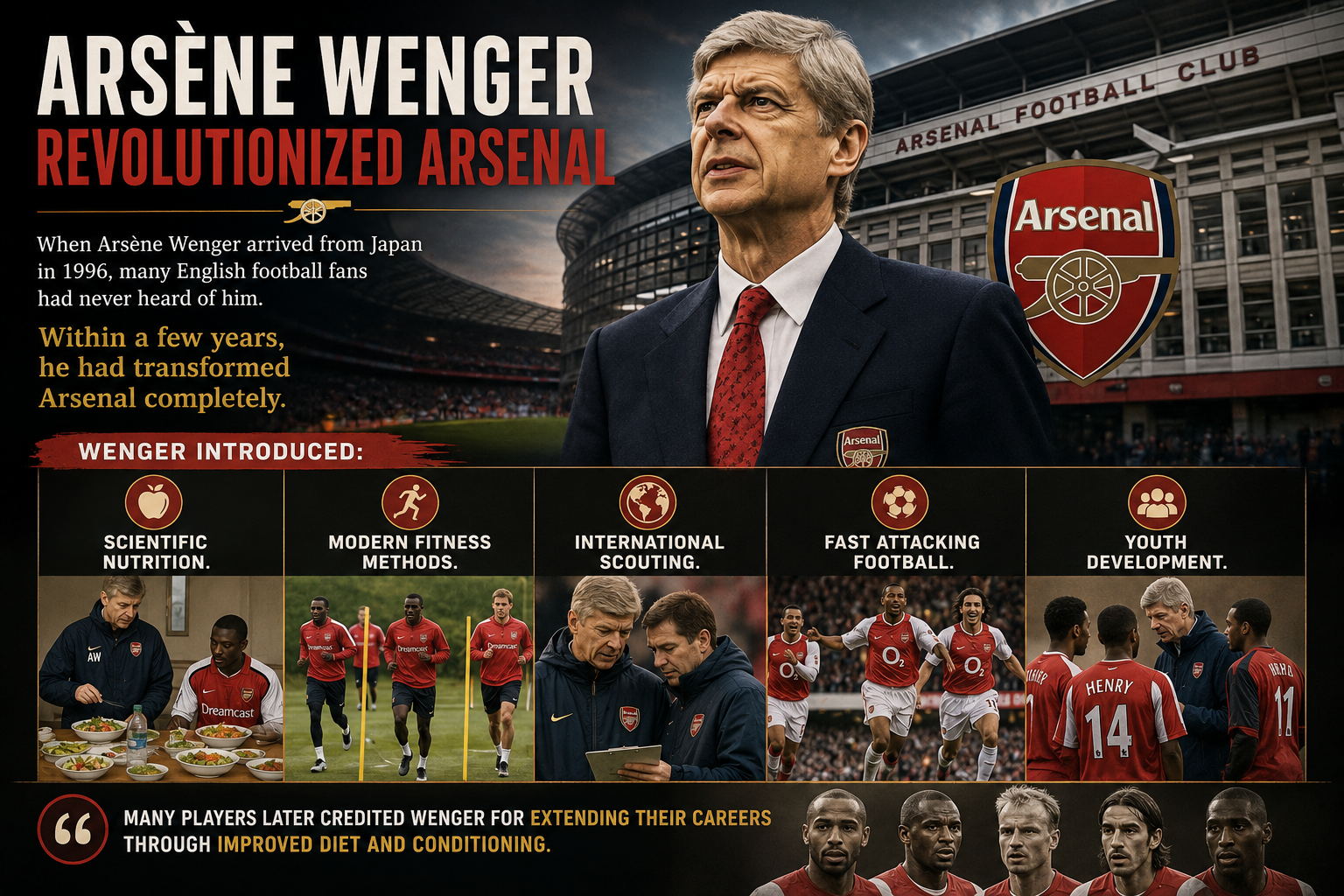
When Arsène Wenger arrived from Japan in 1996, many English football fans had never heard of him.
Within a few years, he had transformed Arsenal completely.
Wenger introduced:
- Scientific nutrition.
- Modern fitness methods.
- International scouting.
- Fast attacking football.
- Youth development.
Many players later credited Wenger for extending their careers through improved diet and conditioning.
The Invincibles: A Team That Went Unbeaten
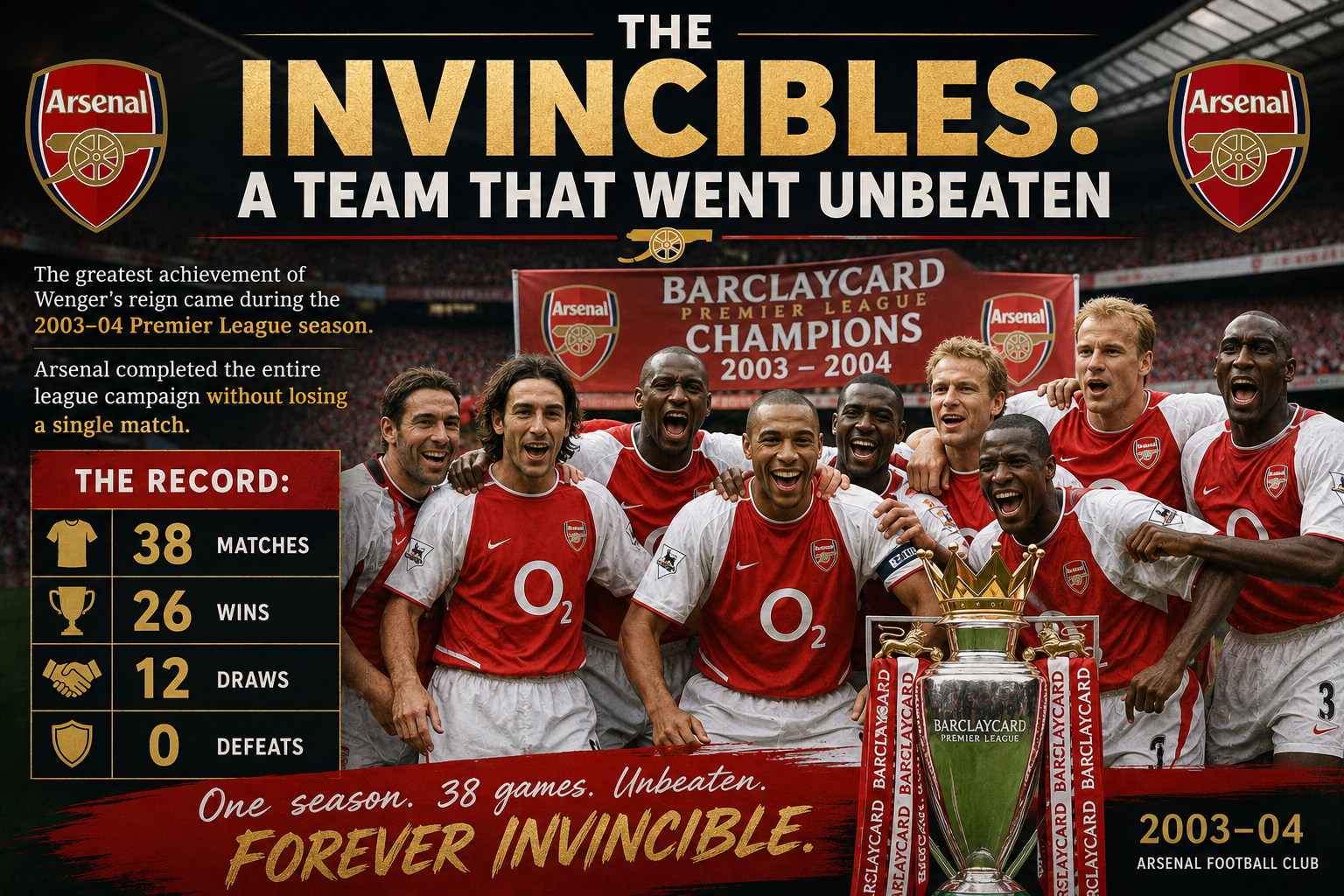
The greatest achievement of Wenger’s reign came during the 2003–04 Premier League season.
Arsenal completed the entire league campaign without losing a single match.
The record:
- 38 matches
- 26 wins
- 12 draws
- 0 defeats
The squad featured legendary players including:
- Thierry Henry
- Patrick Vieira
- Dennis Bergkamp
- Robert Pirès
- Sol Campbell
- Ashley Cole
The achievement earned the team the nickname “The Invincibles.”
To this day, no other club has completed a full Premier League season unbeaten.
Moving From Highbury to the Emirates Stadium
Highbury had been Arsenal’s home for more than 90 years.
However, increasing demand and financial ambition led Arsenal to move into the newly built Emirates Stadium in 2006.
The stadium has a capacity of over 60,000, making it one of England’s largest football venues.
Although the move strengthened the club financially, many supporters still cherish memories of Highbury.
Challenging Years
Building the Emirates Stadium required significant investment.
For several years Arsenal focused on financial stability rather than expensive transfers.
Despite producing talented players and regularly qualifying for the UEFA Champions League, trophies became harder to win.
Critics questioned whether Arsenal could return to the very top.
FA Cup Success Returns
The long wait for silverware finally ended in 2014, when Arsenal defeated Hull City to win the FA Cup after coming from two goals behind.
That victory sparked another successful period in the competition.
Under Wenger, Arsenal became the most successful FA Cup club in English football history.
A New Era
After Wenger left in 2018, Arsenal entered a period of transition.
Former captain Mikel Arteta eventually took charge.
Arteta focused on rebuilding the squad with younger players while restoring the club’s attacking identity.
Young talents such as Bukayo Saka, Martin Ødegaard, Gabriel Martinelli, William Saliba and Declan Rice have become central figures in Arsenal’s modern project, helping the club compete again at the highest level.
Arsenal’s Greatest Legends
Many iconic footballers have represented Arsenal through the decades.
Some of the club’s most celebrated players include:
- Thierry Henry
- Dennis Bergkamp
- Tony Adams
- Patrick Vieira
- Ian Wright
- David Seaman
- Liam Brady
- Charlie George
- Cliff Bastin
- Sol Campbell
- Robert Pirès
- Cesc Fàbregas
- Bukayo Saka
Each generation has produced players who left a lasting mark on the club’s identity.
Fierce Rivalries
Arsenal’s biggest rivalry is with Tottenham Hotspur.
Their meetings, known as the North London Derby, are among the most passionate fixtures in world football.
Other notable rivalries include:
- Manchester United
- Chelsea
- Liverpool
These matches have often played decisive roles in title races and cup competitions.
Arsenal’s Identity
Arsenal are widely admired for:
- Attractive attacking football.
- Developing young talent.
- Strong academy system.
- Financial sustainability.
- Rich football tradition.
The club’s motto, “Victoria Concordia Crescit”, means “Victory Through Harmony.”
It reflects the belief that success comes through unity and teamwork.
More Than Just a Football Club
Today, Arsenal has millions of supporters across every continent. From the workers who formed Dial Square in 1886 to the modern stars competing before packed crowds at the Emirates Stadium, the club’s journey has been shaped by resilience, innovation and an enduring commitment to progress.
Every generation has added another chapter to Arsenal’s story. Some remember the dominance of the 1930s, others the drama of Anfield in 1989, while many still celebrate the Invincibles’ unbeaten season. Together, these moments have built a legacy that continues to inspire supporters around the world.
As Arsenal look toward the future, the club’s history serves as a reminder that greatness is not built overnight—it is earned through decades of ambition, determination and belief.